
Field Notes
— 2026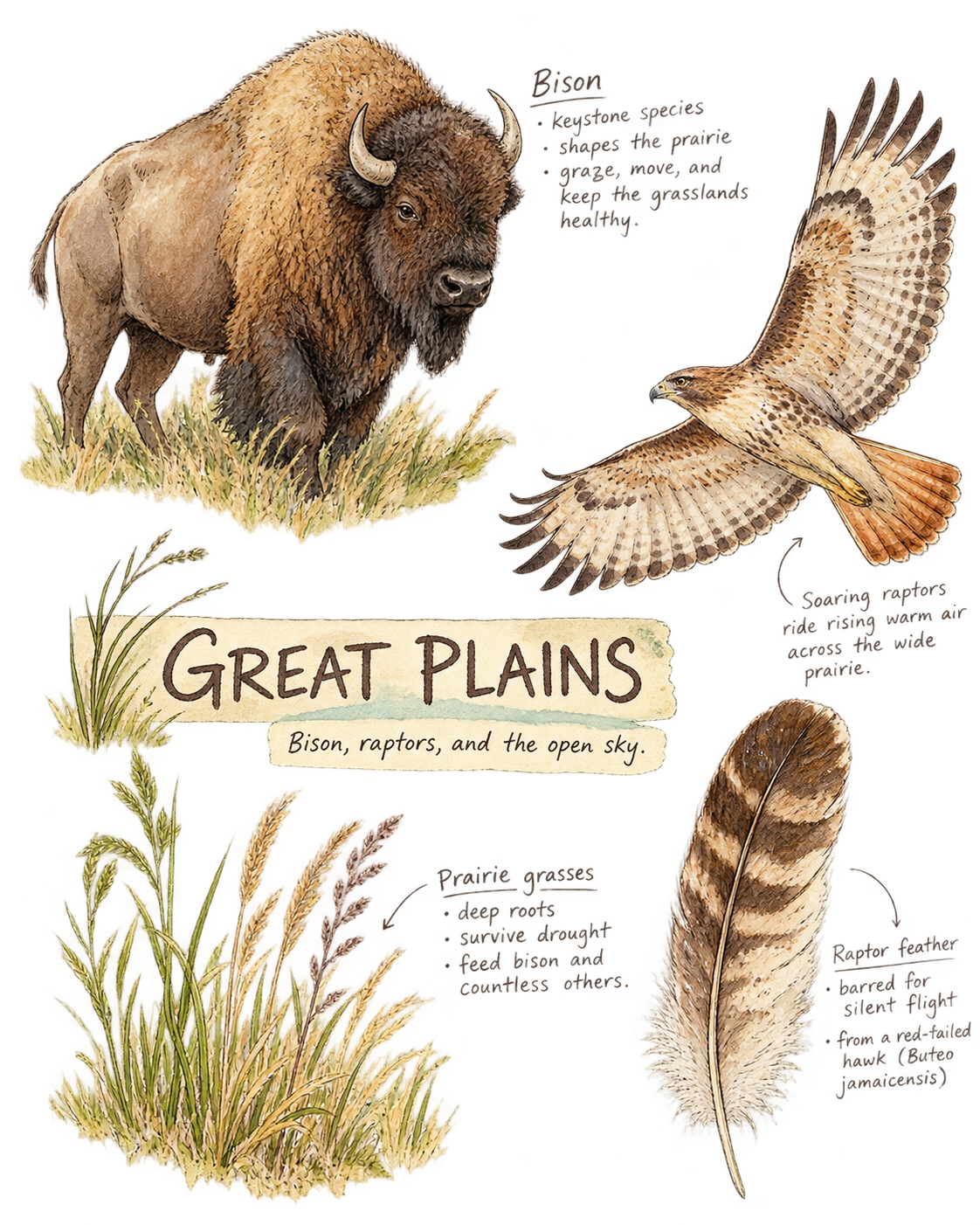 Great Plains
 Waterbirds
 Rainforest
 Pacific Shore
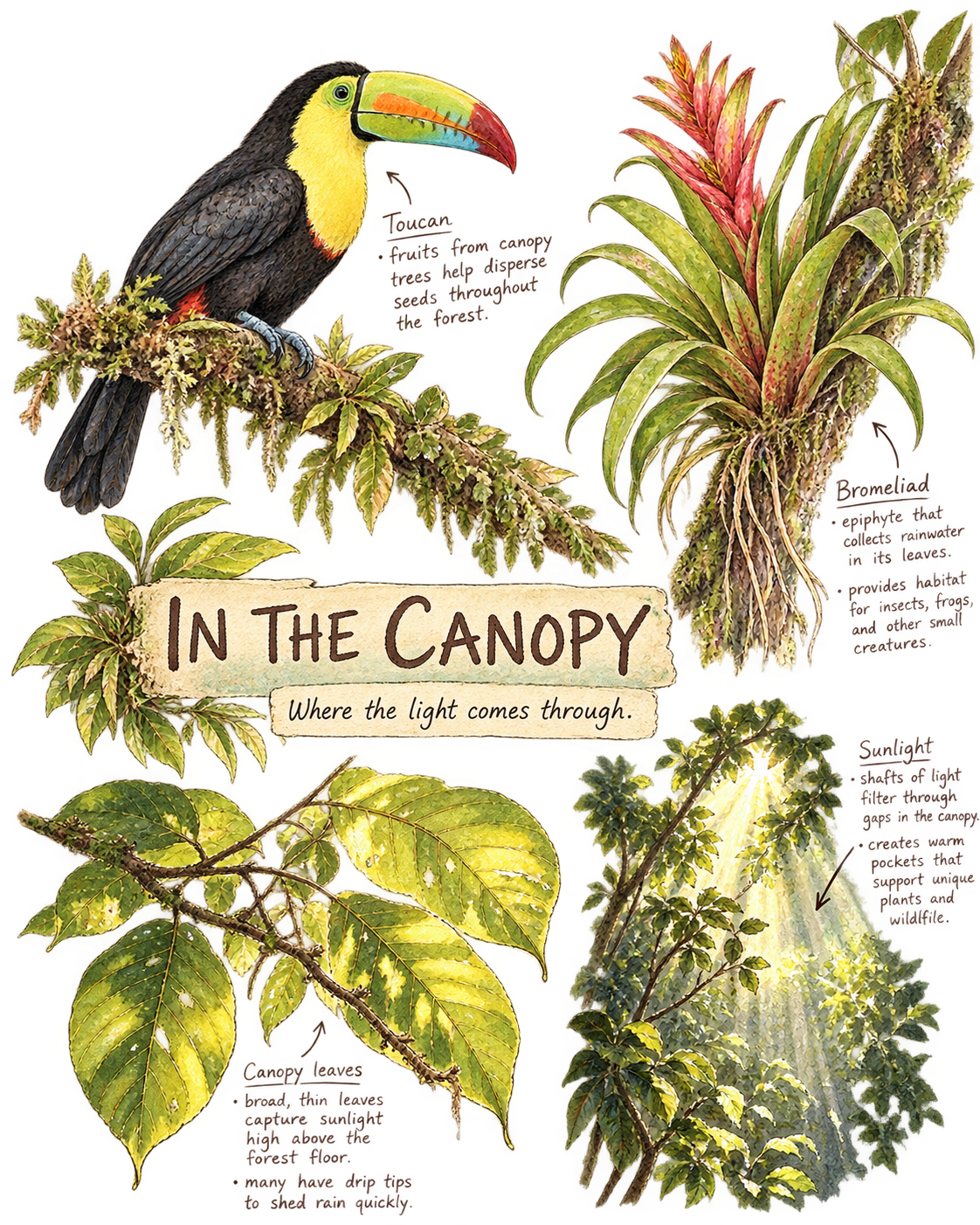 In the Canopy
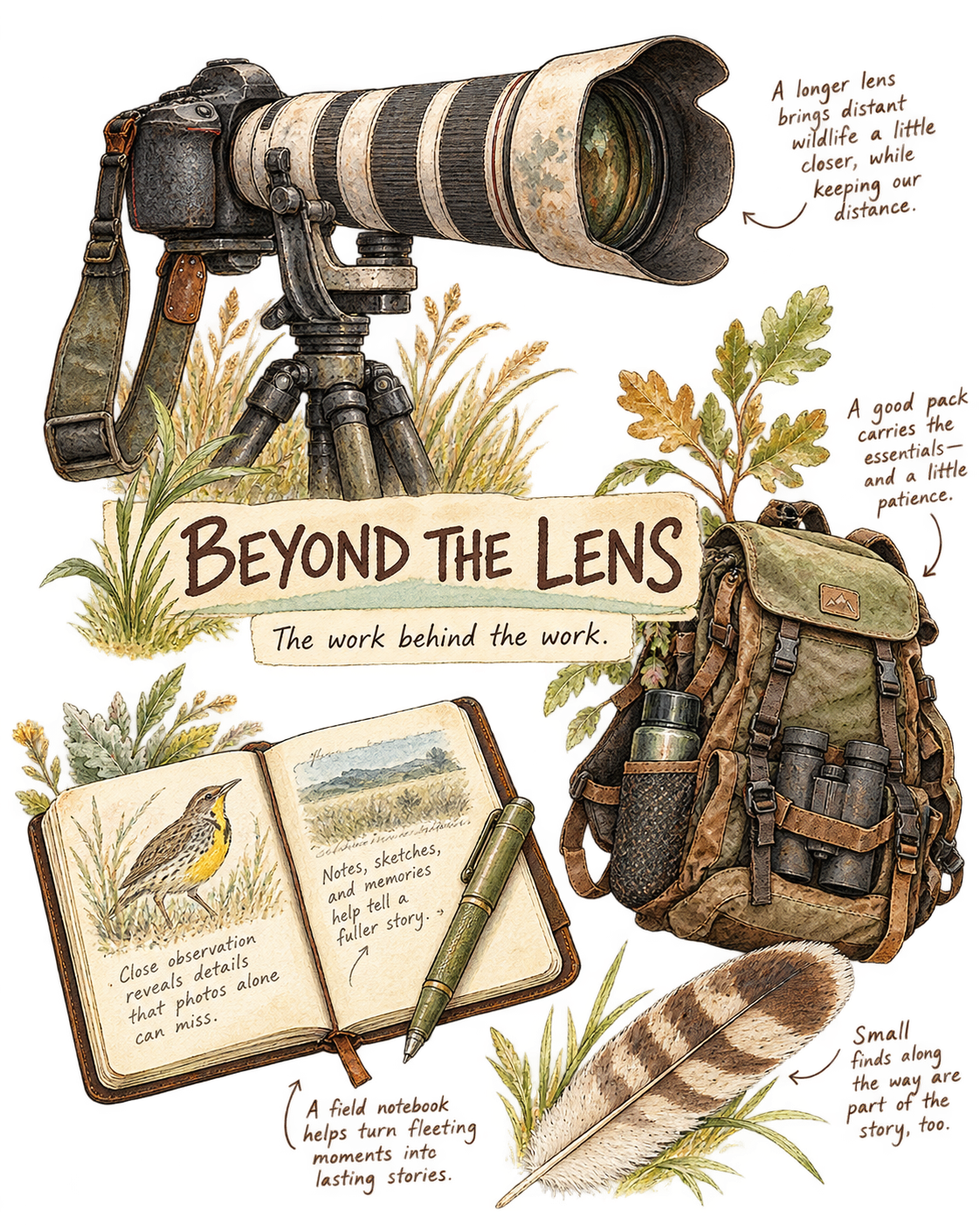 Beyond the Lens
Field Notes
— 2026
Great Plains
Waterbirds
Rainforest
Pacific Shore
In the Canopy
Beyond the Lens
Field Note No. 01
The cottonwoods give it away. Find them and you find water — a creek bed, a low draw, some seam in the earth where moisture collects long enough for roots to reach. Out here everything is about where the water is and where it isn’t, and the land has learned to read that difference at a glance.
I’ve spent mornings watching the light change over the shortgrass — that particular kind of light that comes in low from the east and turns the whole slope gold before the heat arrives. You learn the wind differently out here. It’s not weather, it’s texture. It comes in waves and you start to feel it like a second skin.
The birds know things I don’t. I watch the Western meadowlark post itself on a fencepost and sing into the wind and I wonder what it’s orienting by. The sound carries and carries. Nothing stops it.
Field Note No. 02
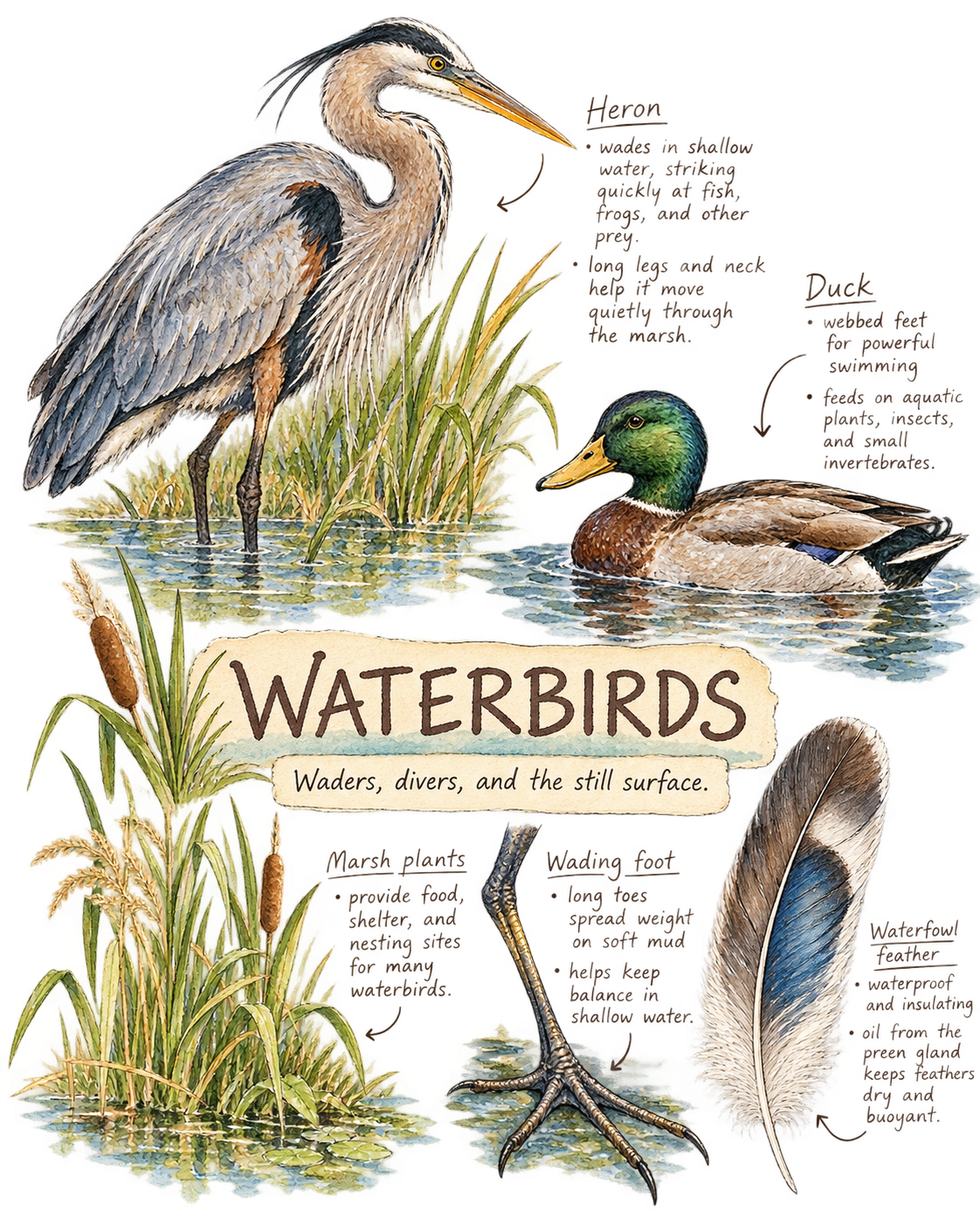
The Great Blue Heron is not a subtle animal. Four feet of patience dressed in grey-blue, standing in eight inches of water for forty minutes without moving. I’ve timed it. The stillness is tactical — a long-legged trap, set and waiting. Then the strike, which is so fast you almost miss it, and so precise it seems unfair.
What gets me is the posture in flight: neck folded back in that deep S-curve, wings slow and deliberate, a prehistoric shape against the sky. The wingbeat has authority. You feel it as much as hear it — a low whomp whomp that moves air.
Marshes teach you to look differently. Everything worth seeing is peripheral, half-hidden, still. You learn to scan in layers — water surface, reed line, sky — and the birds arrange themselves across those layers like a lesson in attention.
Field Note No. 03
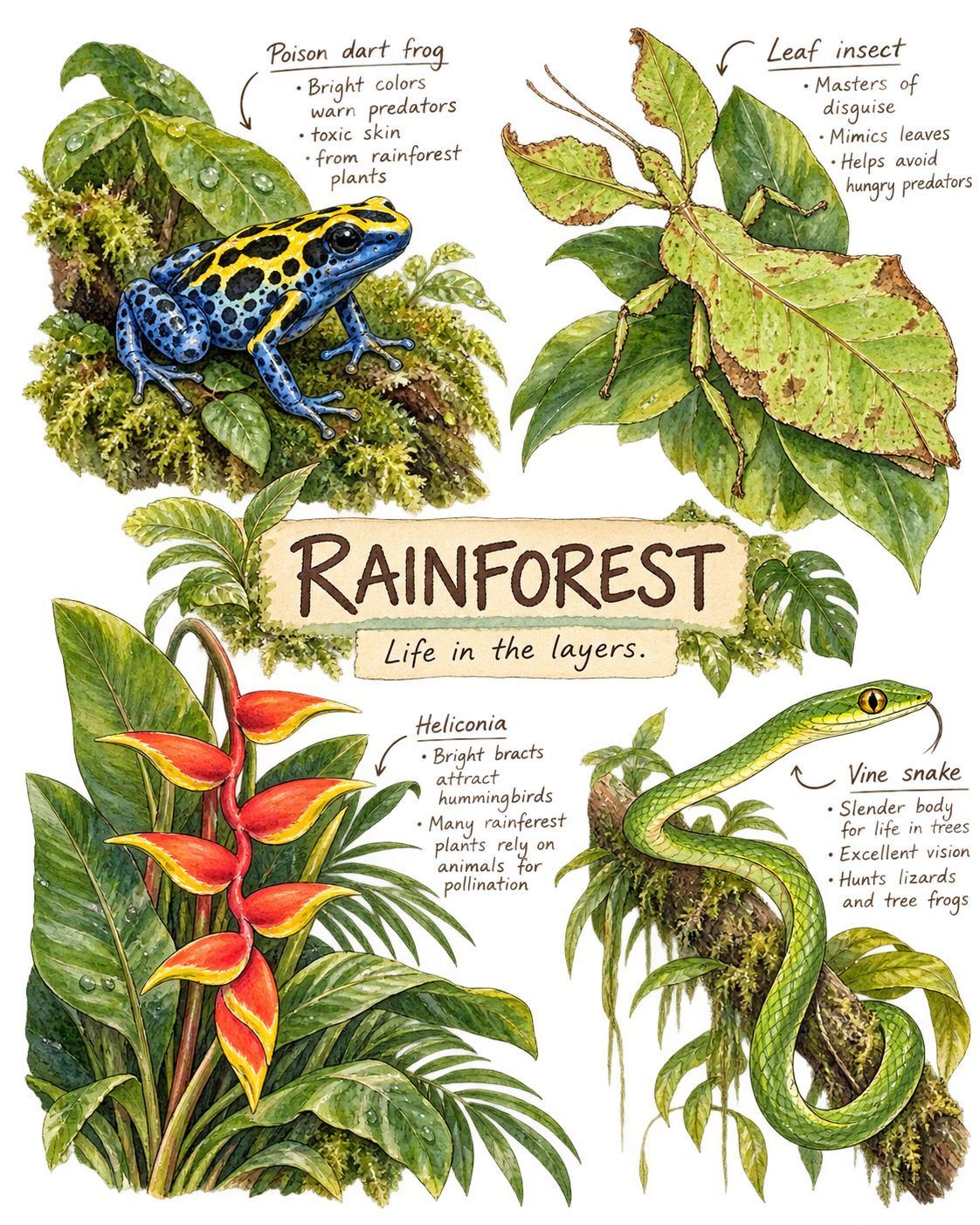
The old-growth trees don’t look real up close. The buttress roots spread out from the base like flying buttresses on a cathedral — three, four feet across at the joins, then tapering as they run out along the forest floor. The tree is solving a problem: shallow soil, enormous weight. The solution took hundreds of years to arrive at and will outlast everything around it.
Sound works differently under a closed canopy. It’s absorbed and redirected. You hear things you can’t locate — a drip amplified into a knock, a call that seems to come from everywhere and nowhere. Orientation gets soft. The light doesn’t give you shadows to read direction by.
I’ve come to think the forest is more vertical than horizontal. The interesting geography is in the layers — understory, midstory, canopy, emergent — each one a different habitat, different light quality, different set of rules. Standing at the base, you’re seeing the floor of something much taller than you can take in.
Field Note No. 04
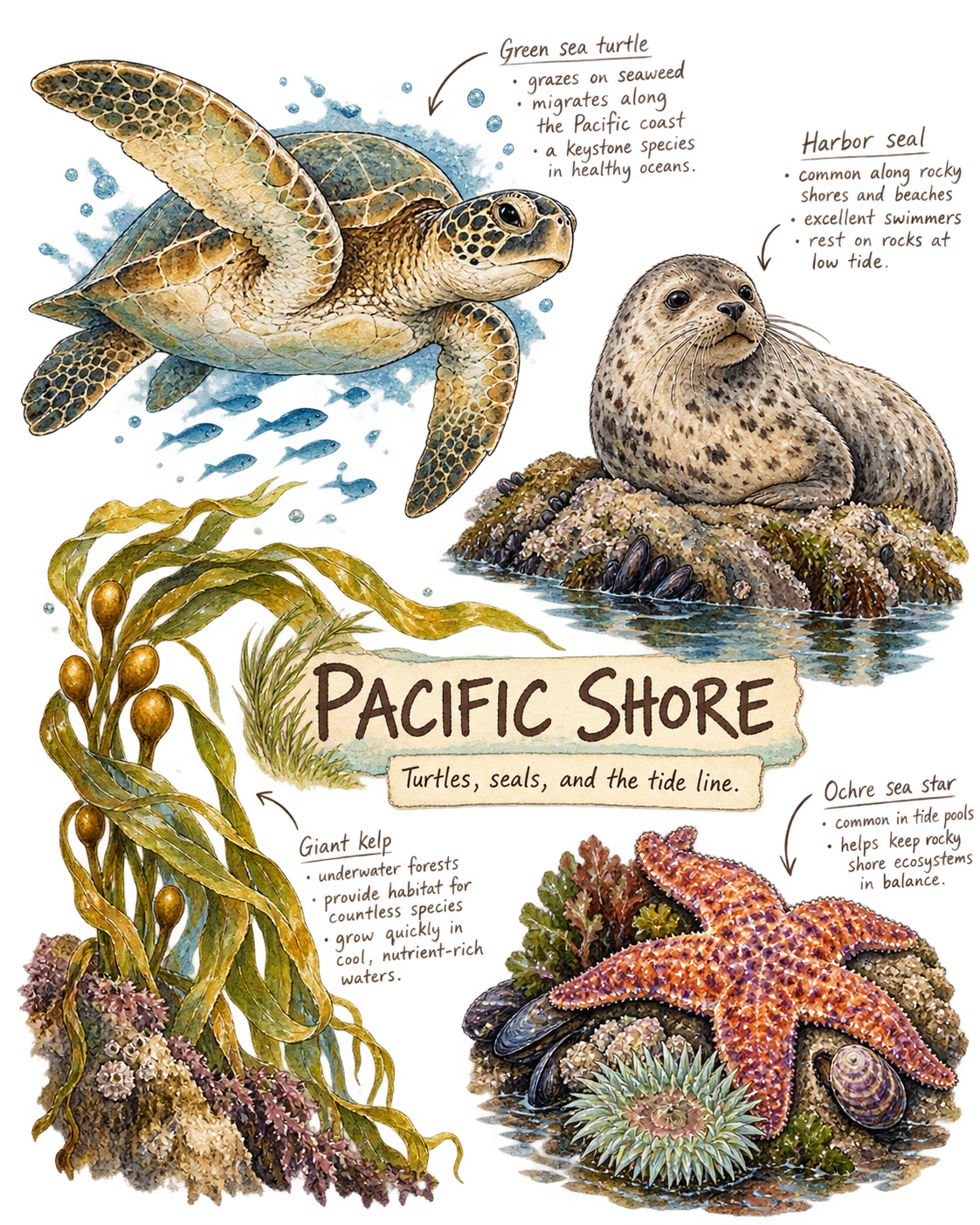
The tide pools are the real thing. At low tide you can crouch over a world that has its own complete logic — ochre sea stars clinging to rock faces, hermit crabs dragging borrowed shells, anemones that close when you touch them. All of it organized around the rhythm of water coming and going twice a day, every day, for as long as these rocks have been here.
The wave sound is something you absorb rather than hear. After a few hours it stops registering as noise and becomes more like atmosphere — a pressure, a texture in the air. You feel it more than you notice it, which is how you know you’ve stopped being a visitor and started being present.
Rocky intertidal zones reward slowness. The faster you move, the less you see. Sit still long enough beside a tidal pool and the animals stop treating you as a threat. The crabs resume. The fish reappear from under ledges. The whole small community comes back to itself.
Field Note No. 05
Looking straight up through the canopy is disorienting in a good way. The branches radiate outward from the trunk above you, foreshortened, overlapping, and the leaves at the crown are so far up they read as texture rather than individual shapes. You start to understand why cathedral builders looked at forests first.
The canopy is not still. Even on quiet days there’s movement — a branch swaying slightly, a leaf turning to catch light, small adjustments the tree is making to the conditions of the moment. Overhead, warblers move through the foliage so fast and at such a remove that you identify them by behavior more than by field marks.
There’s a particular quality of light that comes through a closed canopy — green-gold, diffuse, coming from everywhere at once. It’s the light of being inside something living. I find it very calming, which is probably not a coincidence. We spent a long time in forests before we spent time anywhere else.
Field Note No. 06
The camera is a focusing instrument, and I don’t mean optically. I mean that carrying one into a field forces a different kind of attention. You start asking what the frame does to a thing. What it includes and what it cuts. What the light is doing at this exact angle, this exact hour. You stop skimming and start reading.
The best shots I’ve made were not planned. They came from being in the right place long enough for something to happen — a bird landing in good light, a shadow moving across the right patch of ground. Patience is the technical skill no one talks about. You can learn f-stops in an afternoon. Patience takes years.
I’ve also come to believe that the photograph is not the point. The photograph is what you have to show for the time you spent paying attention. The attention itself is the experience. If the camera is working right, it teaches you to look. What you do with that looking, out there in the field, is the real work.